
Something Real Happened in DC on April 14th
On a Tuesday afternoon at the MLK Jr. Memorial Library, something genuinely different took place in Washington, DC. And if you missed it, you'll want to know about it.
The day started off with the Human Capital Quarterly Spring Forum; organized by Levy Strategic Design and the DC Public Library, with program partners Civic Tech DC and The Upskilling Labs. It was built around a hard truth: DC is full of talent, resources, and urgency, but the people who should be finding each other too often don't.
Clara Haskell Botstein, Chief of Staff to DC's Deputy Mayor for Education, opened with a frank fireside chat about two tectonic shifts hitting the region: federal workforce downsizing and AI's growing impact on knowledge work. She highlighted TalentCapital.ai, a free AI-driven platform connecting DC-area jobseekers with jobs, training, and career services, and left the room with a clear message: "You're wanted and valued here. You will write the next chapter of DC."
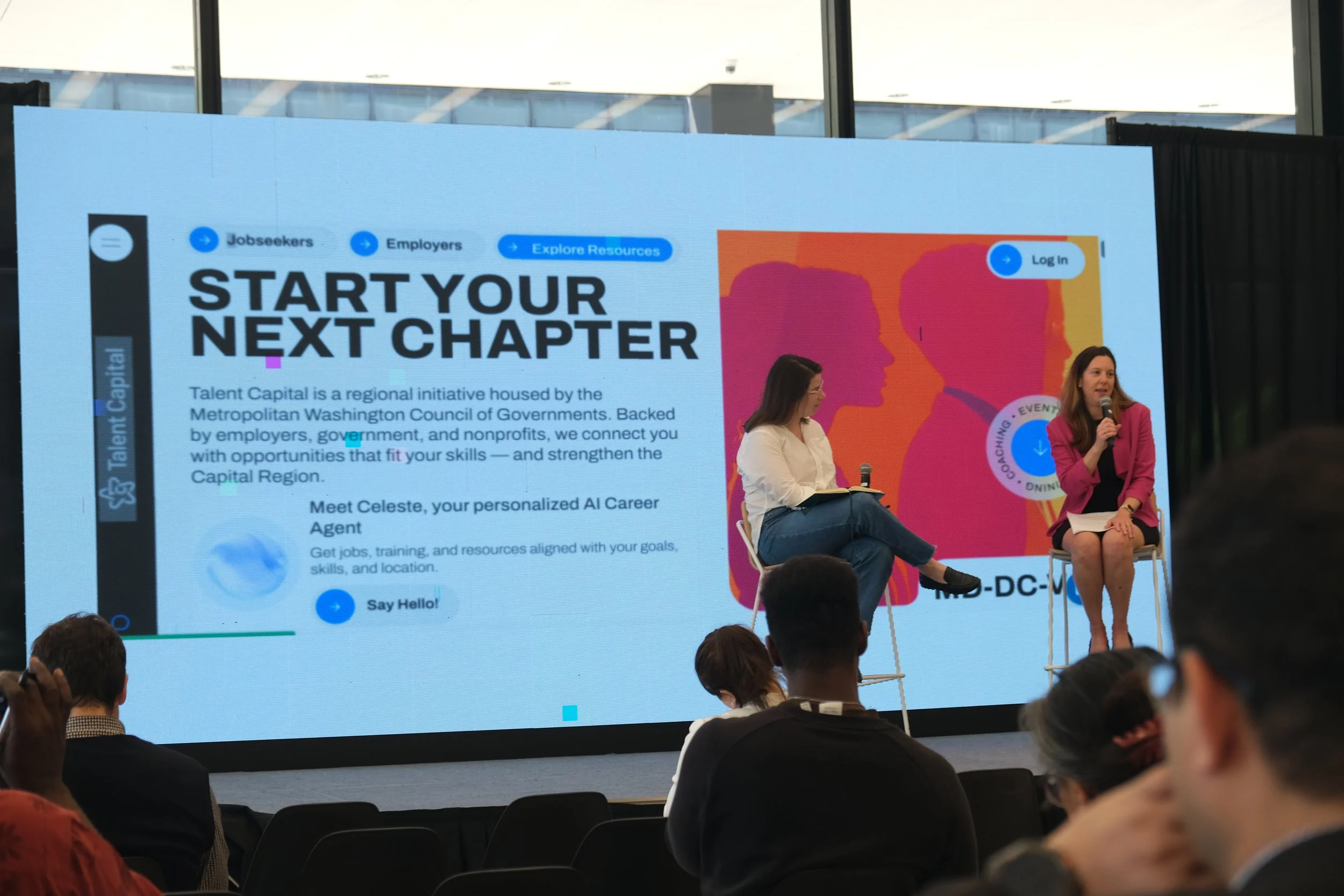
Clara Haskell Botstein (r) explaining DC’s TalentCapital.ai initiative in conversation with Ann Marie Guzzi.
Then came one of the most grounded conversations of the day. Christian Jones of the DC Hospital Association and Brittny Pinto of PEPCO's Workforce Development team, moderated by Pat Philippe of the Workforce Investment Council, gave attendees a real look at where opportunity lives: roughly 50,000–60,000 vacancies in healthcare and 15,000–20,000 in energy in the DC area. Project management emerged as a key skill across both sectors.
On AI, both panelists pushed back on the hype. "It is a misconception that AI is new," Pinto said. "What's needed now is turning AI from a tool to a teammate." Jones echoed this sentiment from the healthcare side: "AI will help you be more human," freeing clinicians from paperwork so they can focus on patients.
The panel was equally direct about what it takes to break in. There's no magic credential in healthcare. "Figure out who you are and what you bring to the table," Jones said. In the energy sector, time management and stress tolerance are the real differentiators. "A lot of people call them soft skills, but we call them power skills," Pinto said. "Your personality will push you through."
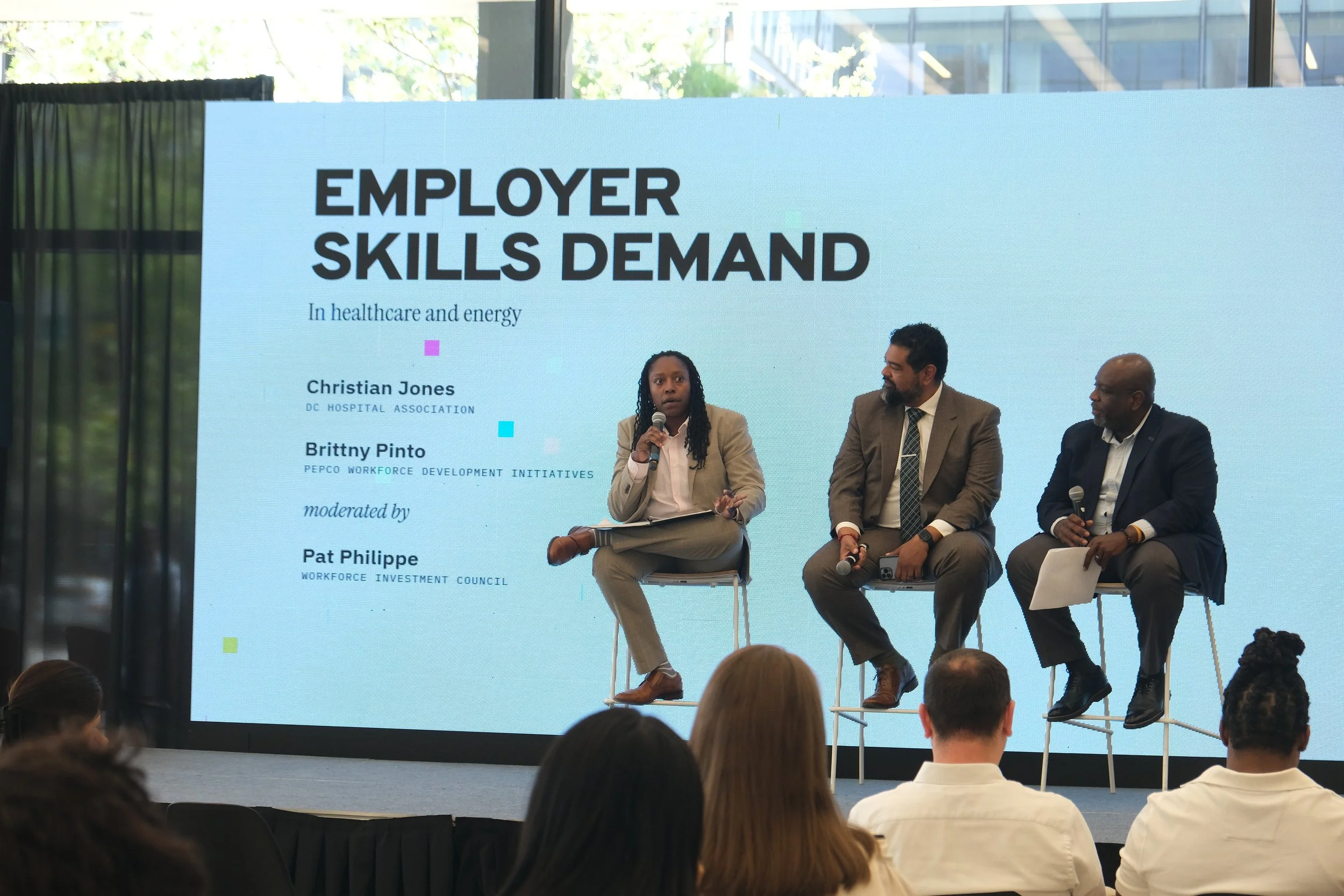
Brittny Pinto (l) discussing what the energy sector is lookng for in employees with panelist Christian Jones and moderator Pat Philippe.
Their sharpest words were for the workforce system itself: stop treating companies as employers whose job is to place people. Build genuine partnerships. And stop defaulting to four-year degrees. The trades are desperately needed, pay well, and carry less of the debt.
Next, educators and career coaches, Javi Calderon and Lea Berry, led a working session on personal branding and LinkedIn. Your brand is how others perceive you, and the goal is to be intentional about it. Calderon and Berry asked attendees four essential questions: What are you good at? What do you love? What does the world need? What can you be paid for? The intersection of all four is where you belong. Calderon also recommended Never Search Alone by Phyl Terry, a practical job search guide built around peer support, candidate-market fit, and owning your process from first conversation to final negotiation.
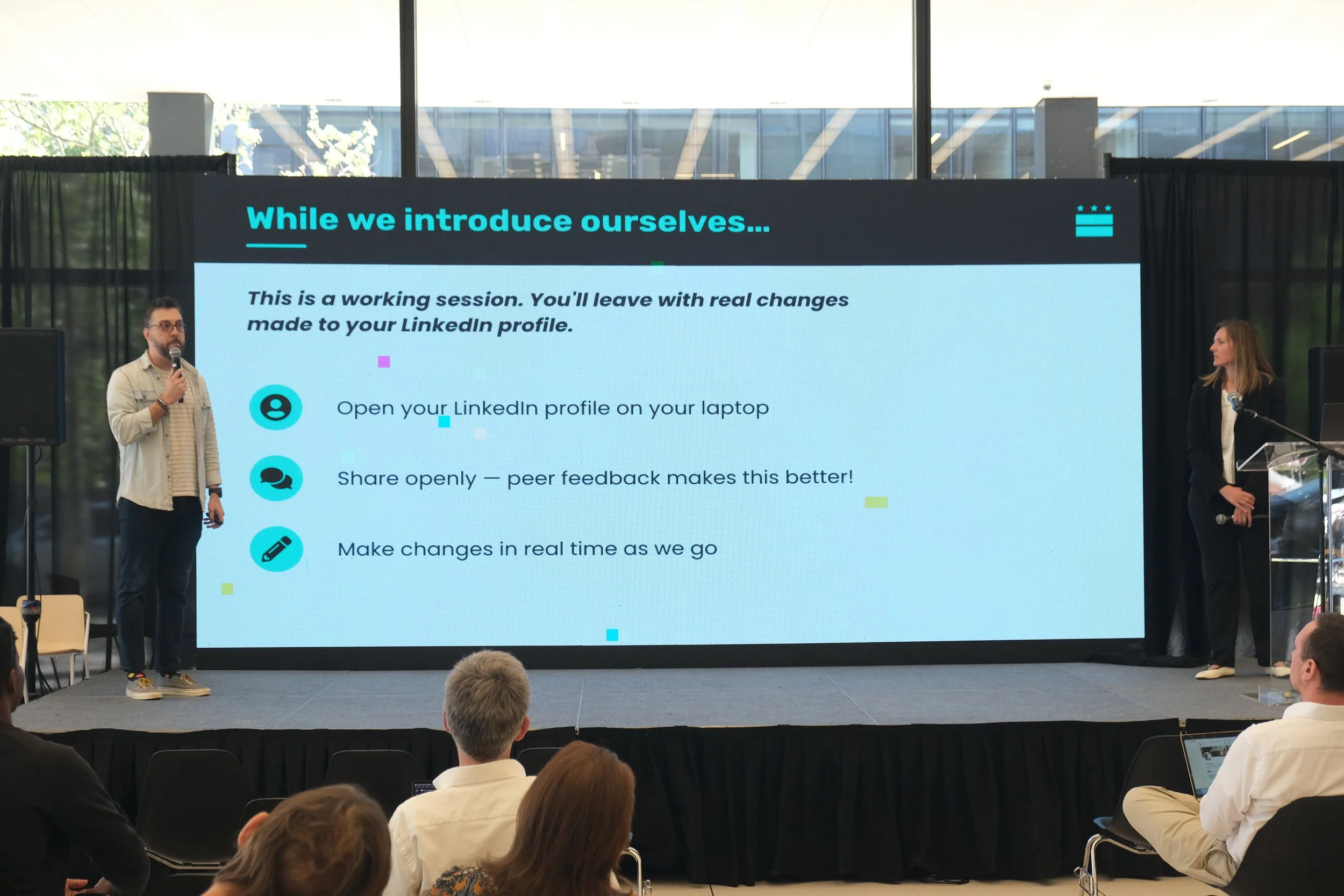
Javi Calderon (l) and Lea Berry (r) sharing with the audience ways to optimize a LinkedIn profile.
Next, EChO and the Civic Tech DC team walked the room through a live AI build. Together they tackled a very real problem: the daily commuting struggles of DC cyclists. Audience participants worked hands-on, using AI to develop user stories for RideFlow DC, EcHo's app born from the inaugural Upskilling Labs’ cohort.
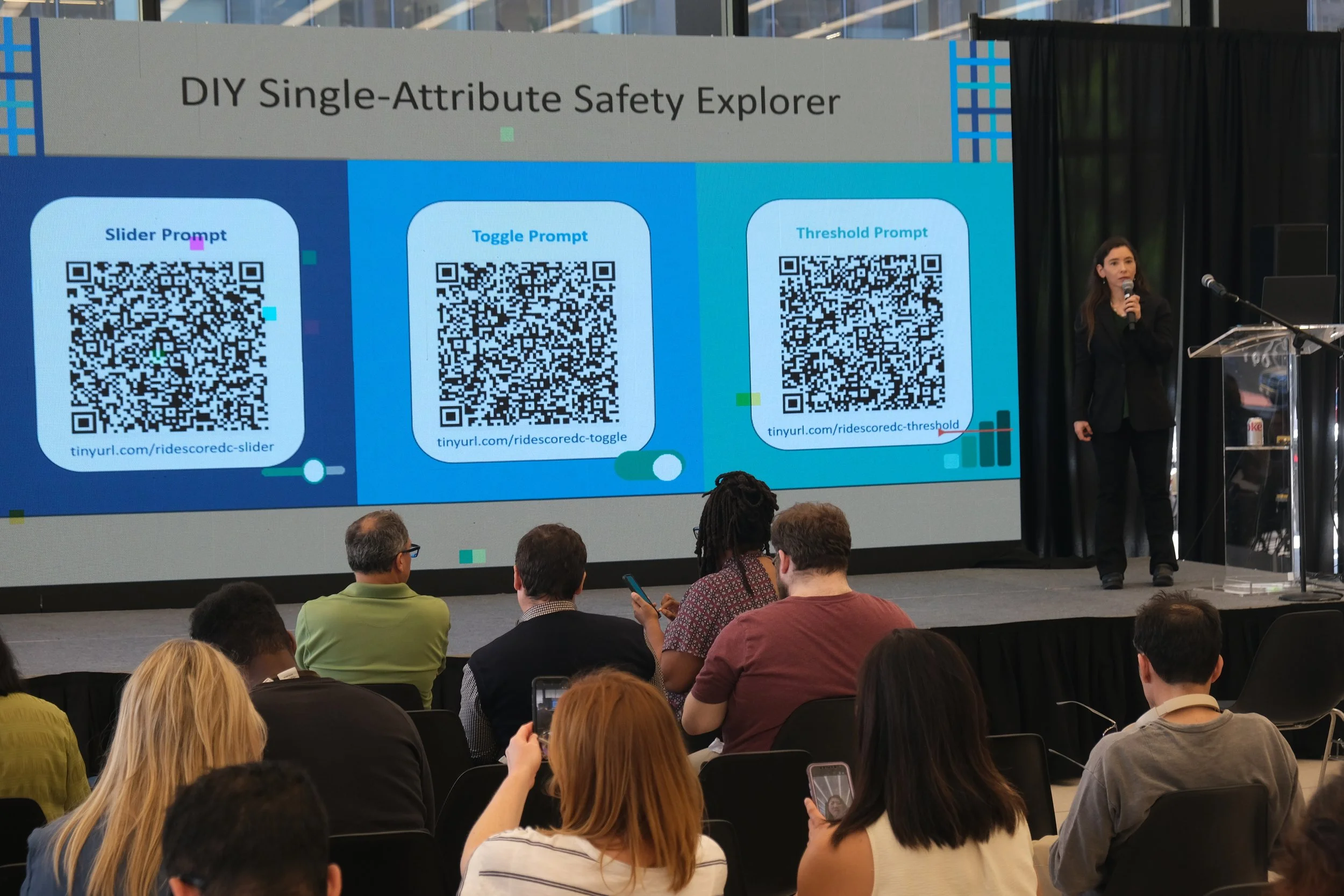
EChO walking audience participants through a live AI build.
The Upskilling Labs Summit then took the stage and the community delivered.
The climate and energy panel didn't hold back. Moderated by Rhea L. Marshall, Director of Employee Communications and Executive Thought Leadership at Exelon, the conversation featured Amanda Bradshaw, Deputy Director for Grid Infrastructure at the U.S. Department of Energy's Office of Electricity, and Trey Sherard, Riverkeeper for the Anacostia River. Bradshaw started off with an example of how AI is already changing things in the energy sector. Connecting a power facility to the U.S. grid currently takes an average of five years, mainly due to complex engineering studies. Using AI, one Midwestern energy market reduced the initial study phase from two years to just ten days, freeing engineers to focus on other problems. But the risks are equally significant. Data centers are enormously resource-intensive, consuming vast amounts of water and energy, and the panel was clear that chasing efficiency alone misses the point. The call from the room was for a rigorous value assessment, one that weighs both the ethical and environmental costs of how these technologies are built and deployed.
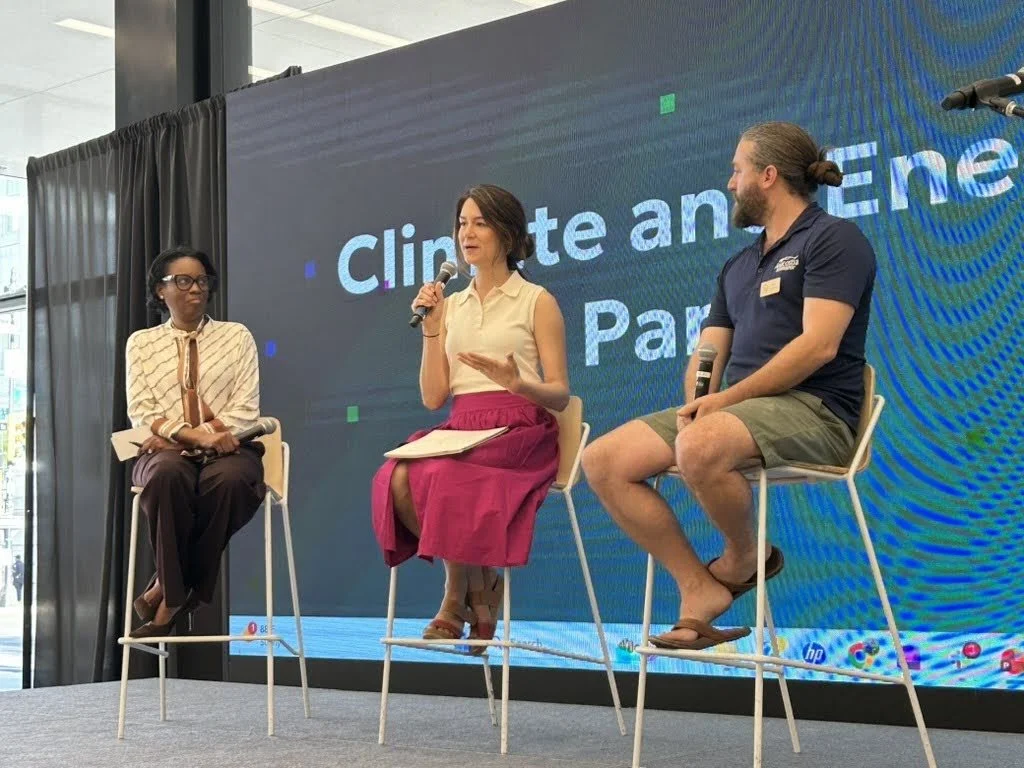
Amanda Bradshaw (center) with moderator Rhea L. Marshall (l) and Trey Sherard (r) discussing how AI is impacting the energy sector.
The conversation got sharper from there. Too many companies are showcasing impressive pilots without actually implementing anything at scale. The industry needs to self-regulate and be held accountable. And as Sherard put it, sometimes AI learns in ways that miss the point entirely, optimizing for efficiency. AI operates without a moral compass. The skills that won't be automated? Critical thinking, legal and technical reasoning, and the judgment to know when a problem doesn't actually need AI at all. Liberal arts, emotional intelligence, and the simple habit of checking your own work are not going away.
The health systems keynote, delivered by Damon L. Davis, Founder and Managing Director of Adaptive Intel, brought a different kind of urgency. He delivered a powerful reminder of what no algorithm can replace: "You and I, we are the interpreters of what our fellow humans feel beyond the data and algorithms. AI, without a human in the loop, might continue making suggestions that skirt past the humanity of the patients and families we serve."
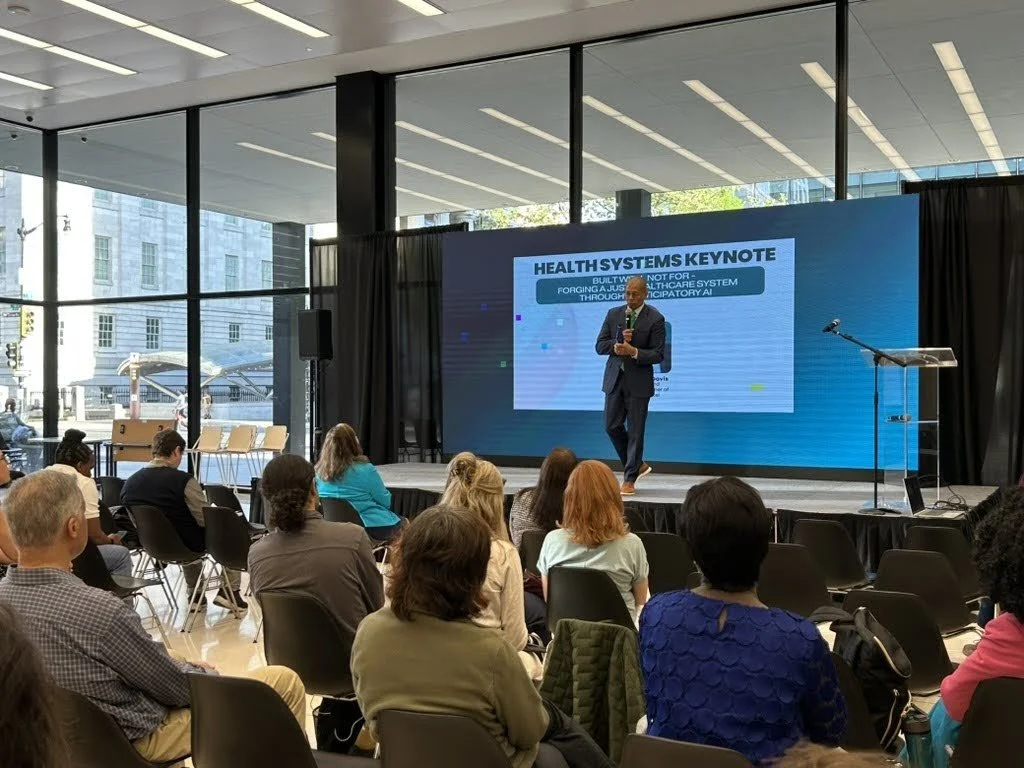
Damon L. Davis addressing the audience during his keynote speech.
Davis’s second charge was equally direct. Health equity is not a buzzword nor a secondary goal. "It is the measure of whether the system functions at all, as Davis puts it. AI can be genuinely valuable in addressing gaps in data and access, but only when used as a tool in service of a strategy, not the strategy itself. His call to action was practical: Innovators need to invite regulators into their conversations early, and government needs to open its doors to innovators. The bureaucracy is real, but so is the opportunity.
The Upskillers’ project showcases demonstrated two teams in progress making strides to address real-world challenges.
CareClarity addressed one of healthcare's most persistent failures: language barriers. Built for the 25 million+ Americans who struggle to navigate healthcare in English, beginning with a model in Spanish language, CareClarity delivers AI-powered clinical translation through exams, consent conversations, and discharge instructions, designed for the clinic, not the tourist.
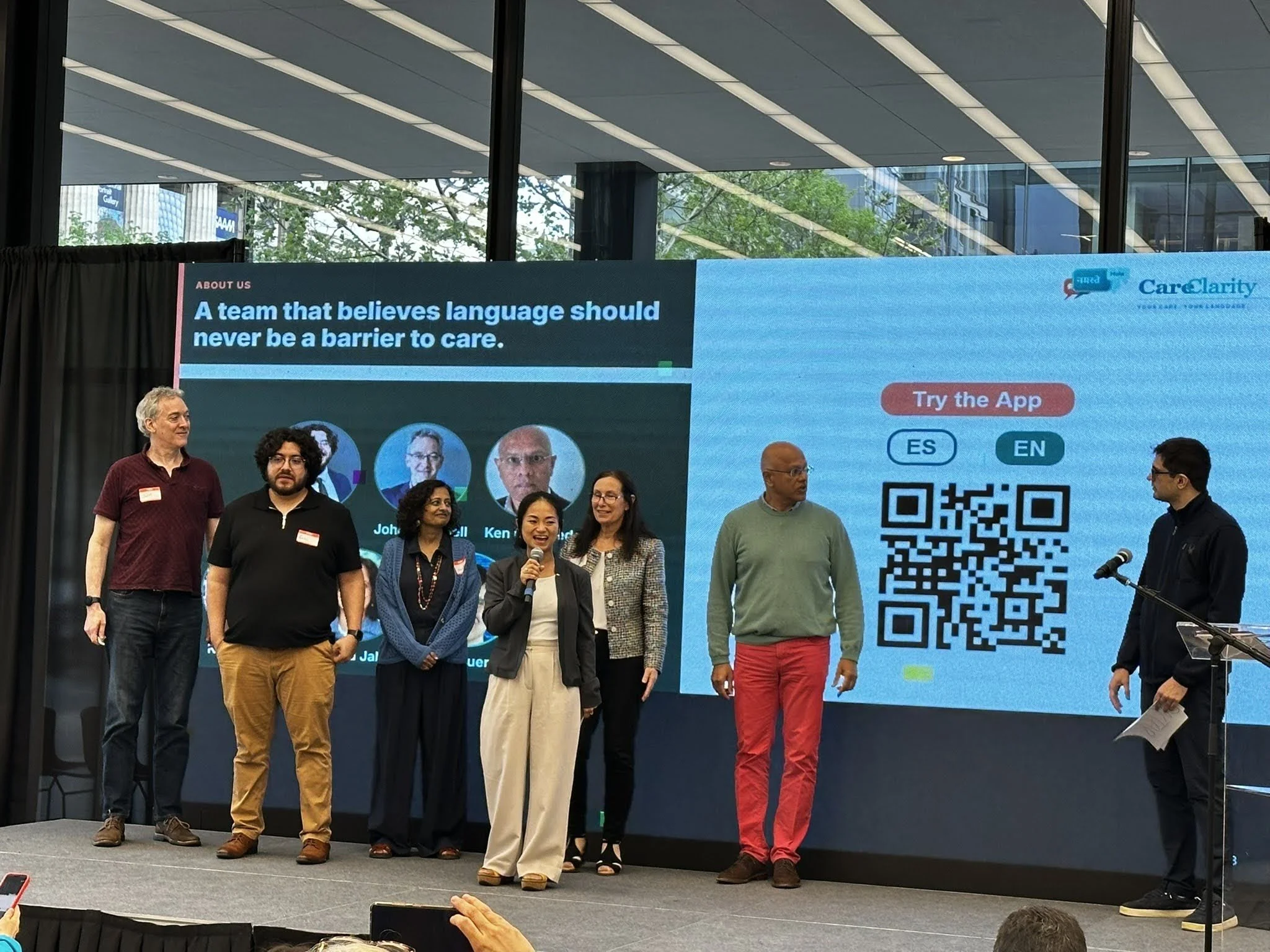
Team CareClarity presenting their project. From left to right: John D. Cornwell, Eric Rivera, Madhu Jalan, Kim Nyugen, Christine Whalen, Ken Figueredo, and Samuel Figueredo.
HealthPass reimagined patient check-in, replacing paper-heavy, risk-prone intake with an AI-assisted prototype that puts your health story in your hands. Their team's takeaway was the night's best line: AI is changing the way we work, but not the way we connect.
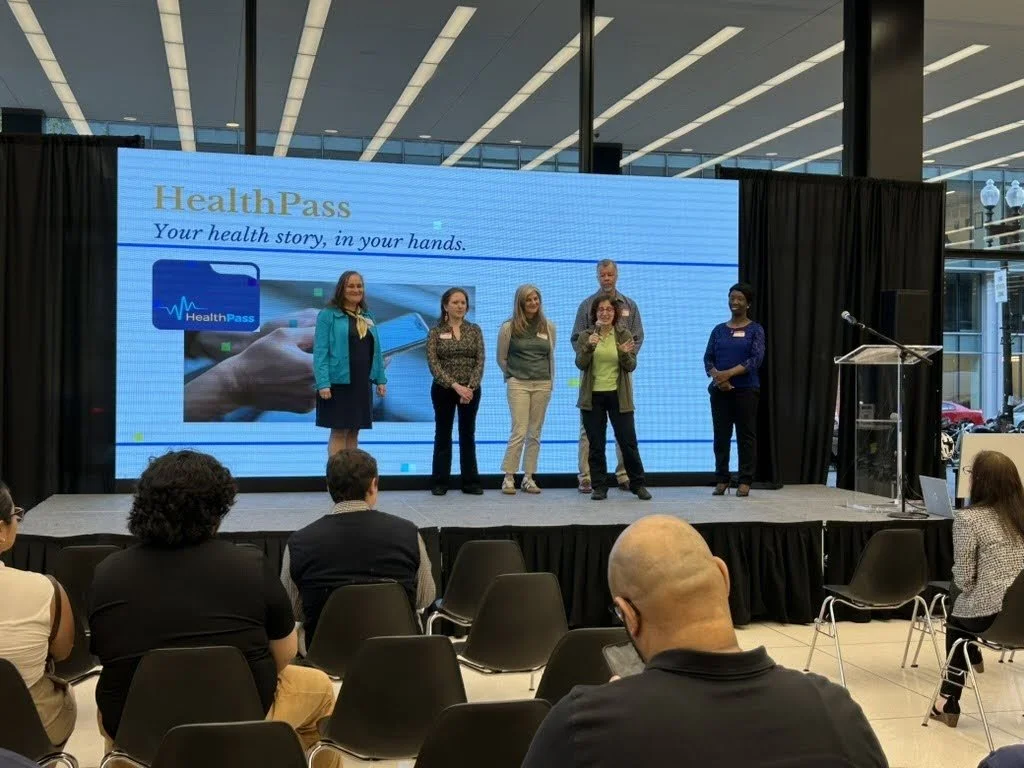
Team HealthPass answering questions from the audience. From left to right: Christina Dzingala, Diana Finegold, Emily Modde, Zeina Shreif, Greg Winston, and Yvonne Paintsil.
To close, The Upskilling Labs launched its Climate & Energy Build Cycle. The next cohort is open. The work continues.
This is what it looks like when people come together to start building the connections, solutions, and communities that make progress real.
Want to attend future meetings and workshops? Or are you looking for other ways to get involved?
- Join The Upskilling Labs
- Subscribe to our Luma calendar for our upcoming events.
- Follow us on LinkedIn.
- Join our Slack for resources, announcements, and community chat.
The Upskilling Labs runs peer-powered, project-based AI upskilling programs across the DC region.
