From Idea to Prototype in a Single Day
Dozens gathered on Capitol Hill to tackle real climate and energy challenges — and left with working prototypes, test plans, and a neighborhood yard sale story to tell.
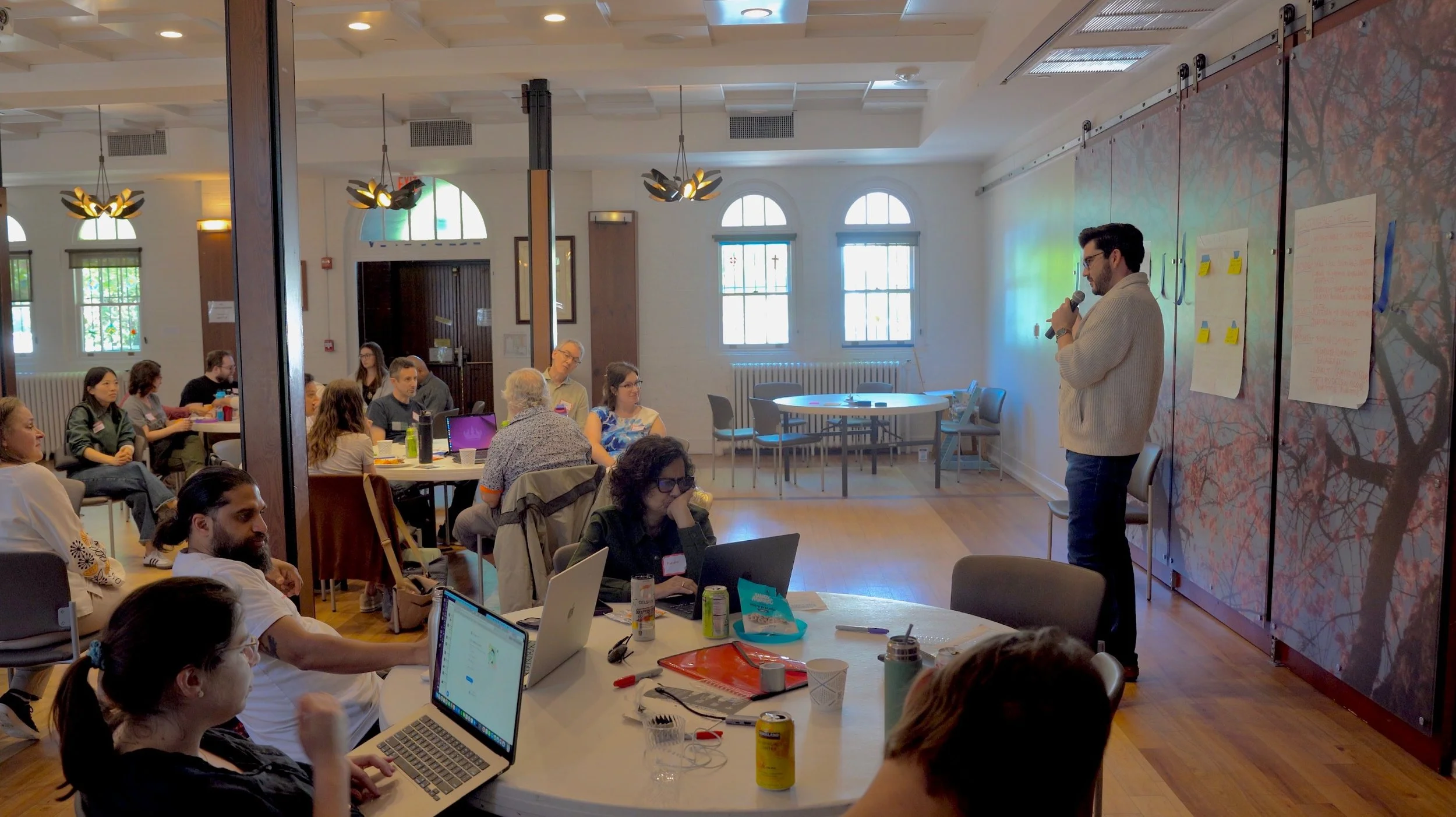
Photo Credit: Alex Mills
On a sun-drenched Saturday in May, sixty-five participants packed into the historic hall at St. Mark's of Capitol Hill for something that doesn't happen often in a cathedral… a day devoted entirely to building — building ideas, building prototypes, and building the kind of cross-disciplinary collaboration that climate problems actually require.
The event, Idea to Prototype: A Climate & Energy Hackathon, was the first Pod Sprint of The Upskilling Labs' open Build Cycle — a structured format where small research teams called Pods spend a day moving from problem framing to testable prototype. By 4:30 p.m., every single participant had something to show: a working prototype, a vibe-coded website, or at the very least, a concrete plan for building prompts and designing products.
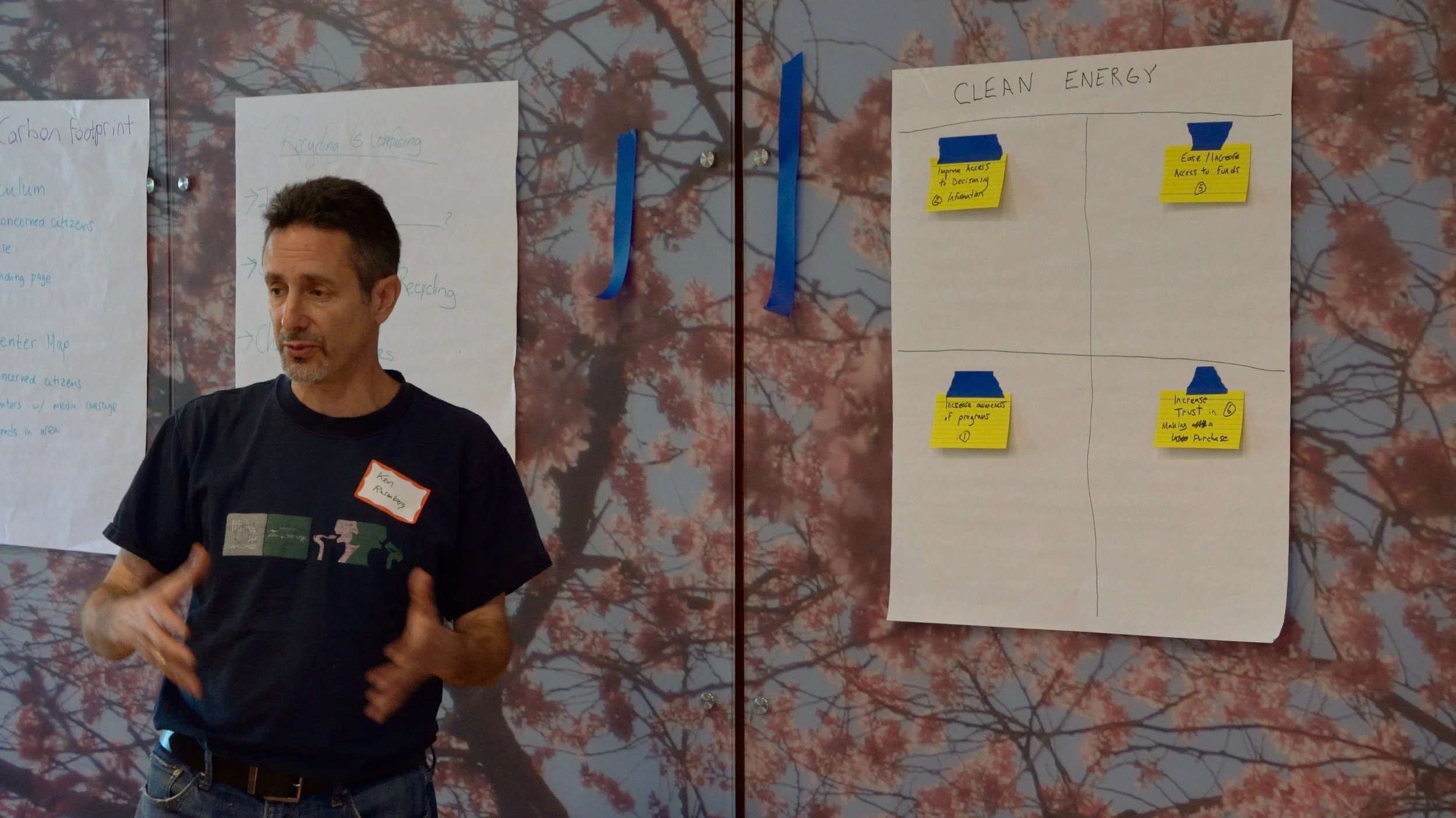
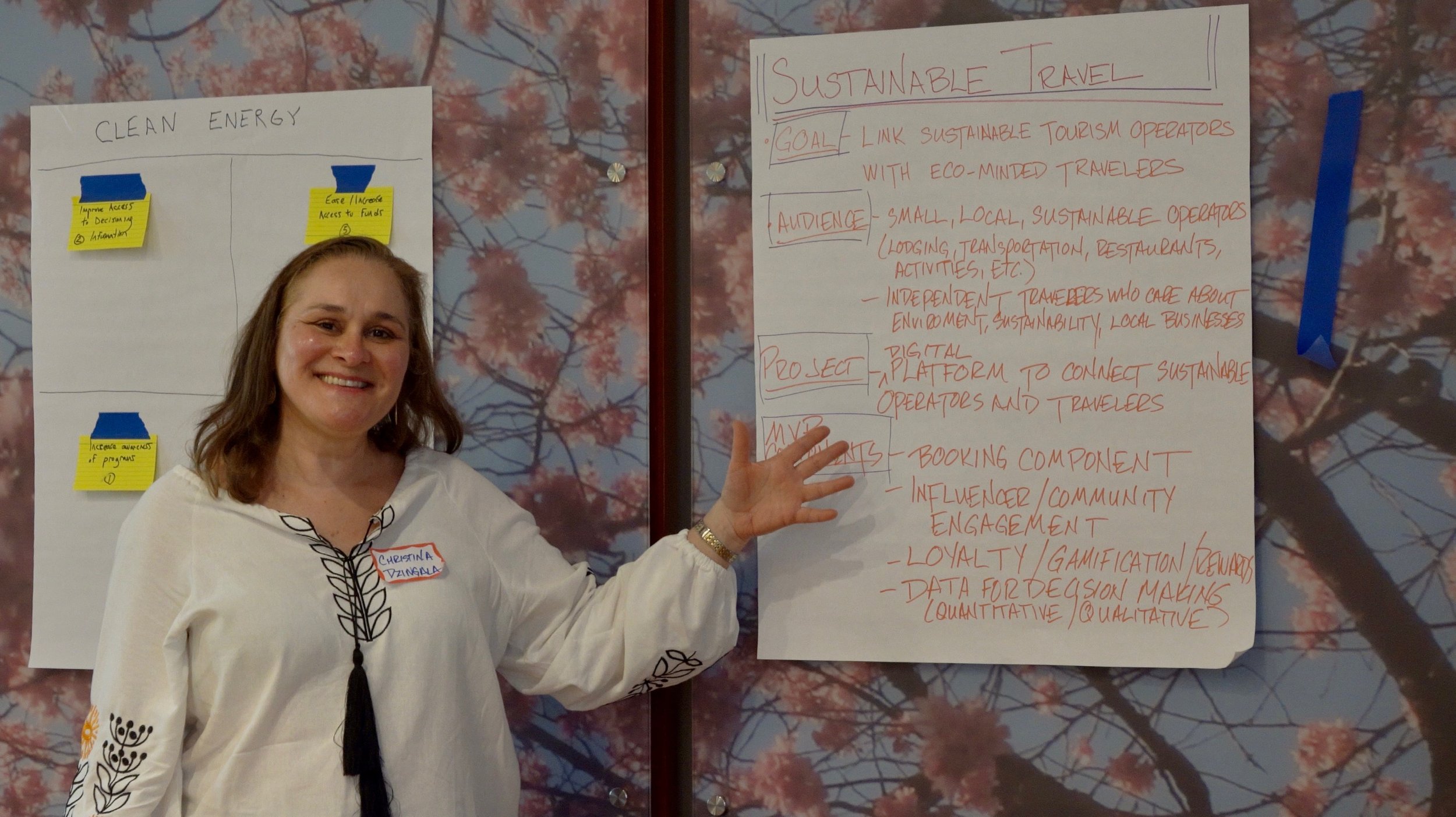
The day ran on two parallel tracks. Experienced participants joined the Pod Sprint, diving deep into problem statements around carbon footprints, clean energy access, recycling behavior, and sustainable travel. Meanwhile, newcomers — some experiencing hands-on AI work for the first time — moved through a purpose-built workshop track that taught design thinking, AI tool fluency, and prompt engineering before converging with the Pods in the afternoon for a "fresh eyes" session.
The morning opened with problem framing: each Pod oriented around a specific environmental challenge, then generated "How Might We" statements — the design thinking practice of turning messy problems into actionable questions worth solving. Facilitators, called Poderators, kept time and held the structure, giving every voice in the room space to be heard.
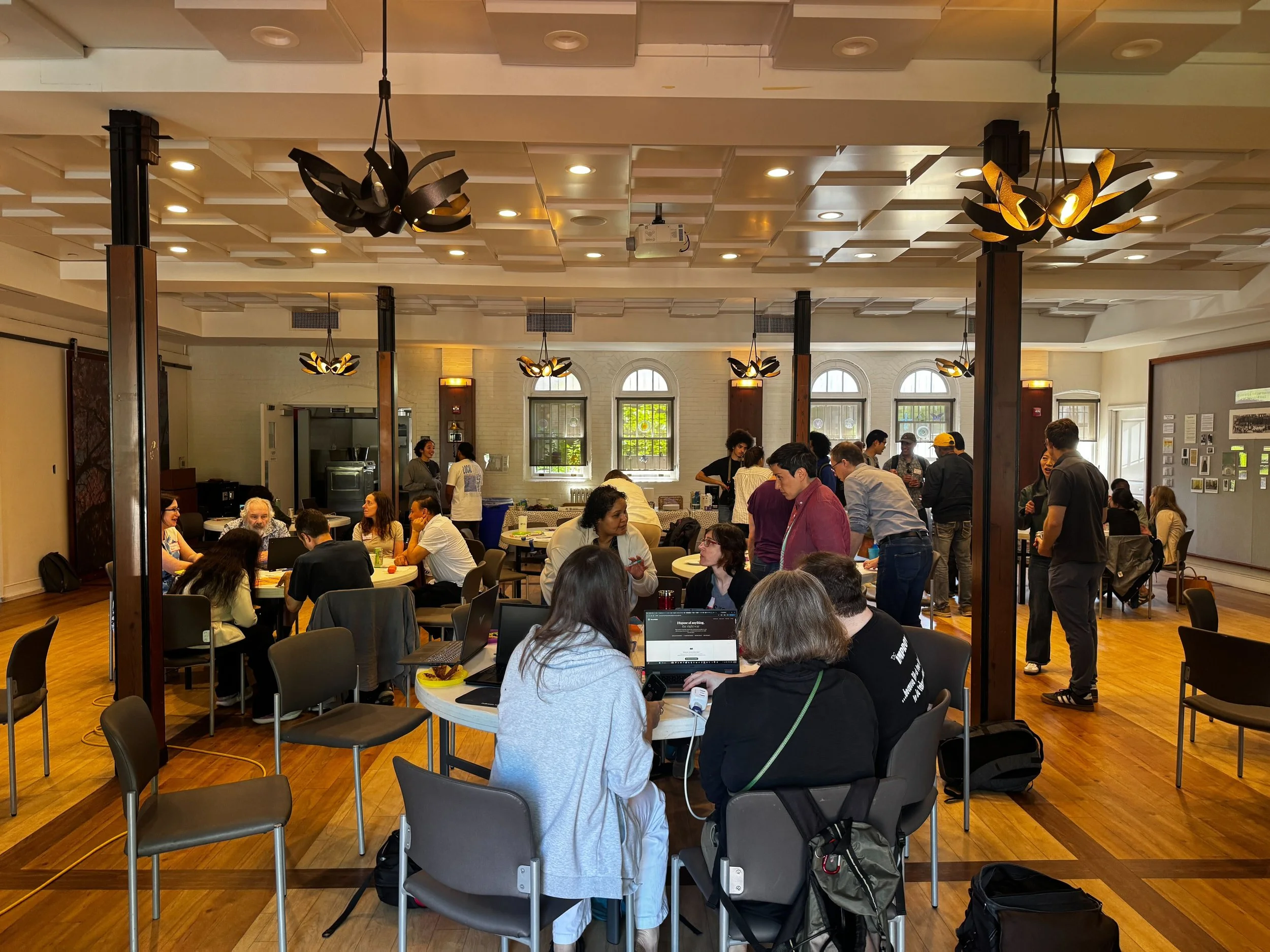
Photo Credit: Ann Marie Guzzi
Lightning talks followed, with Pod members sharing research they'd been developing over weeks. From there, the teams converged on the most promising directions, each person eventually choosing one idea to build out independently. The afternoon was dedicated to prototyping — with AI tools doing heavy lifting on everything from interface design to user research scaffolding — and the day closed with prototype presentations from every Pod member.
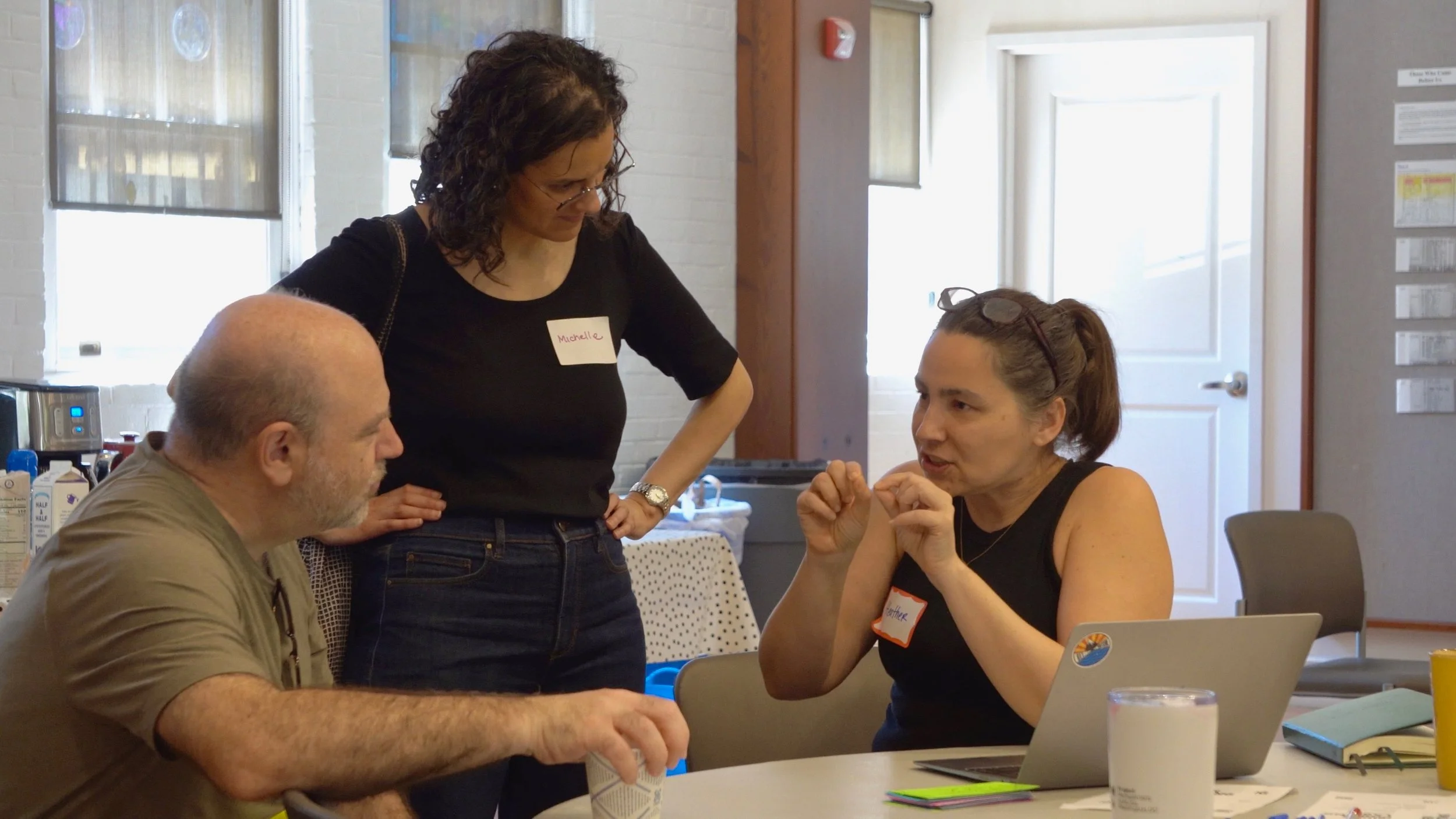
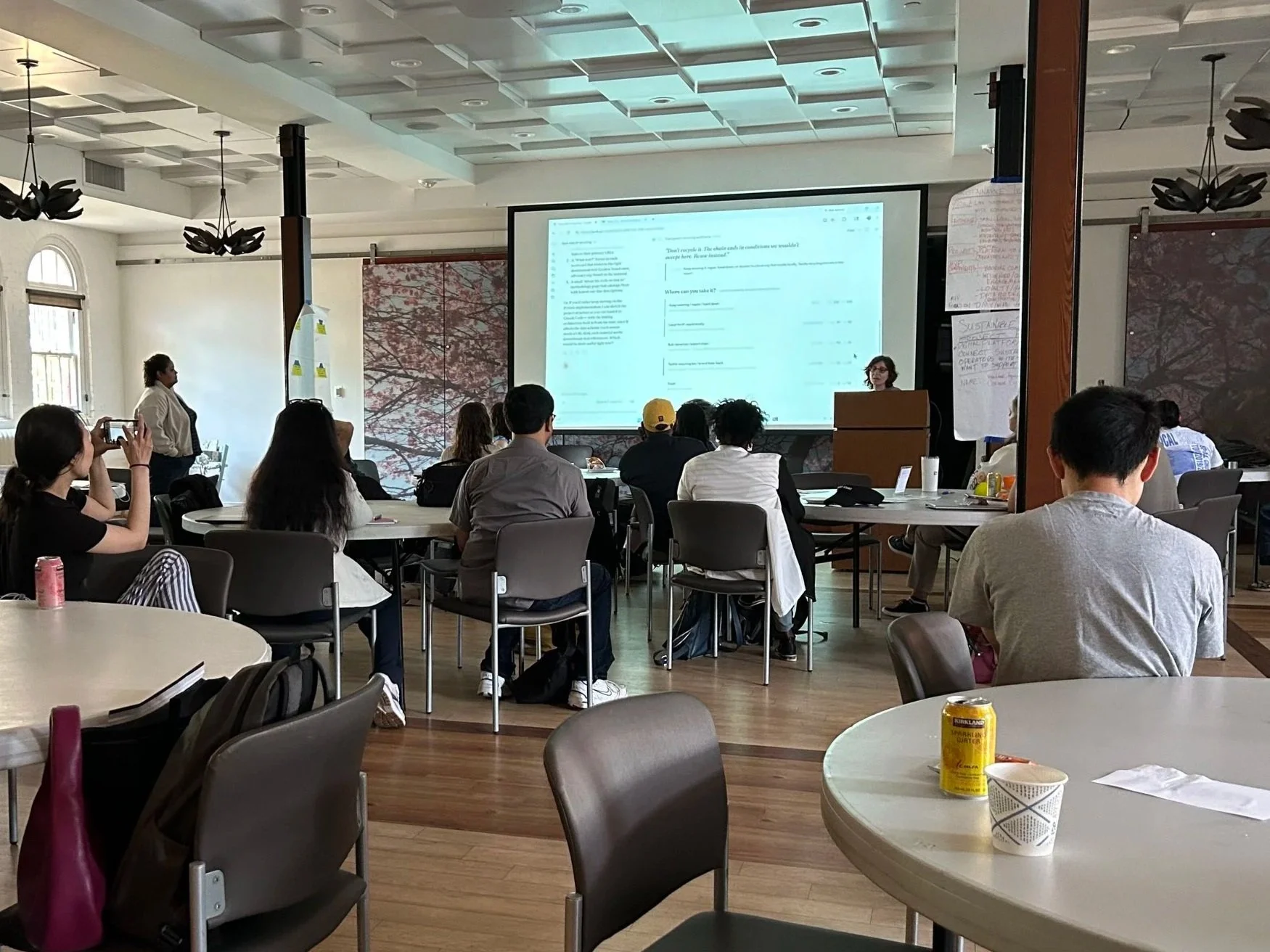
Running concurrently in a breakout room, the newcomer track was its own compact accelerator. The morning opened an introduction to Design Thinking led by Senior Product Owner, Emily Modde. The workshop set the foundation for how to frame prompts and problem-solving in general. Start with empathy.
Anthologist.ai founder, Tommy Shen led an Economics of Building with AI workshop that guided participants through the journey (and cost considerations) of building a platform with AI.
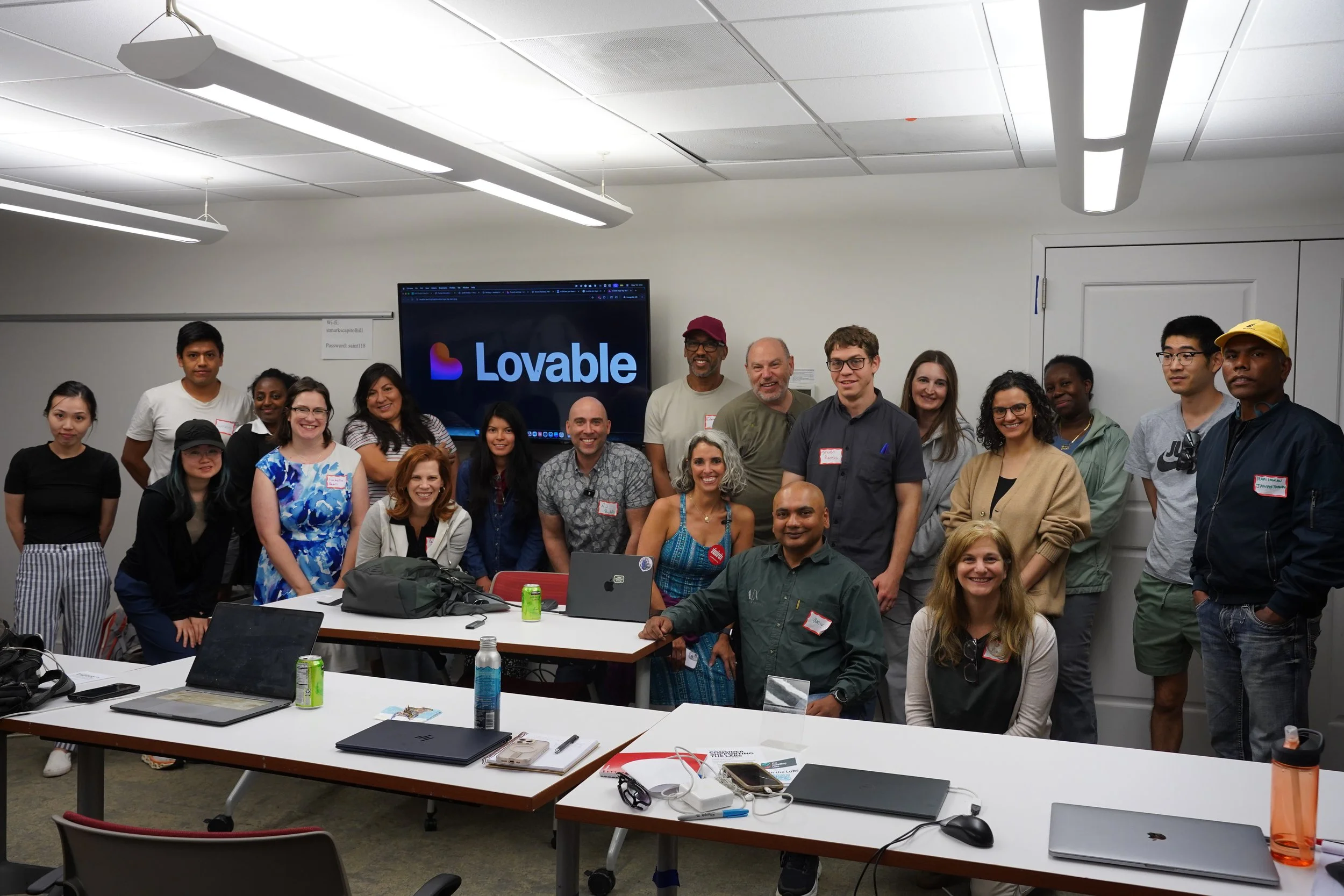
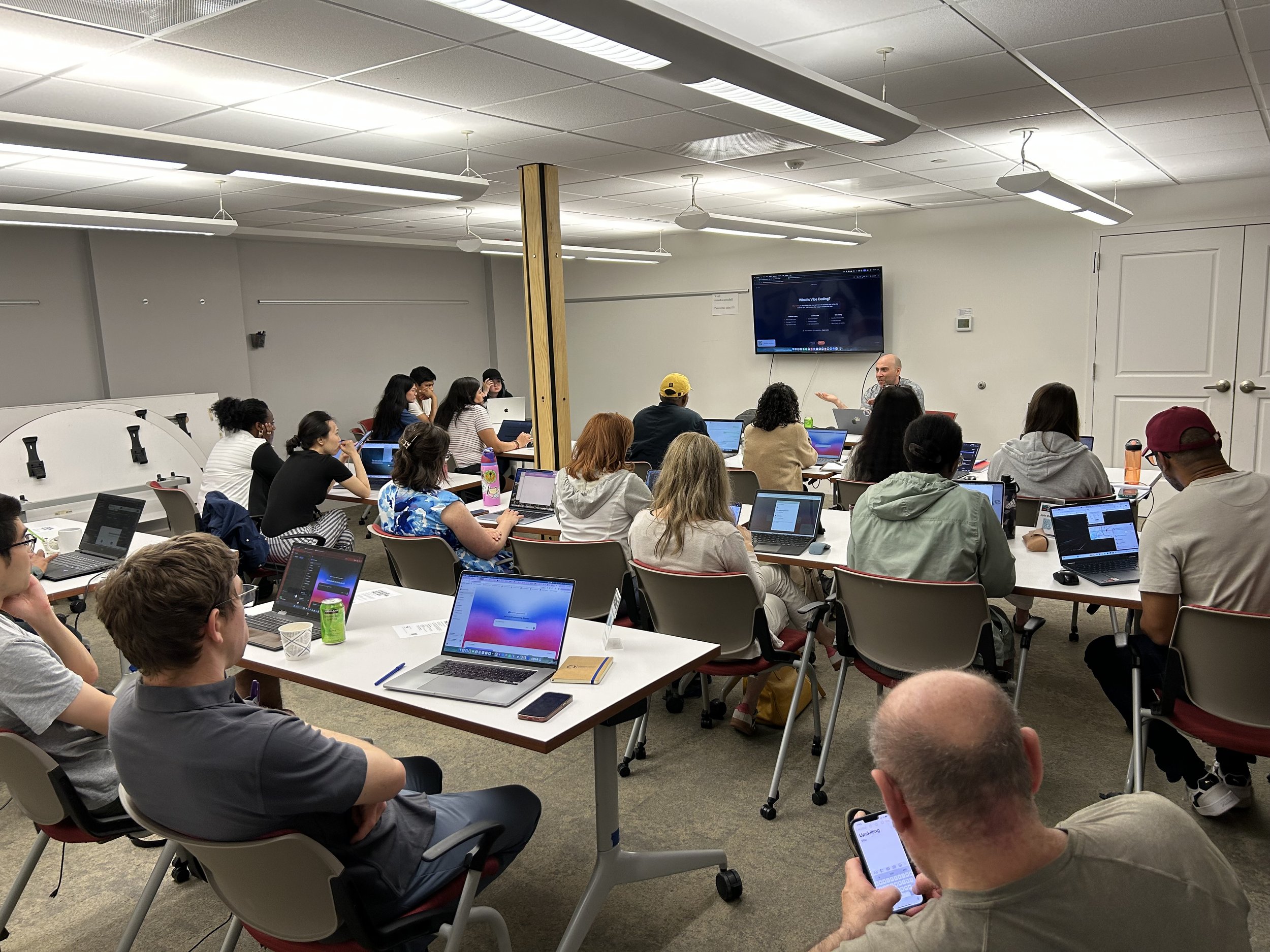
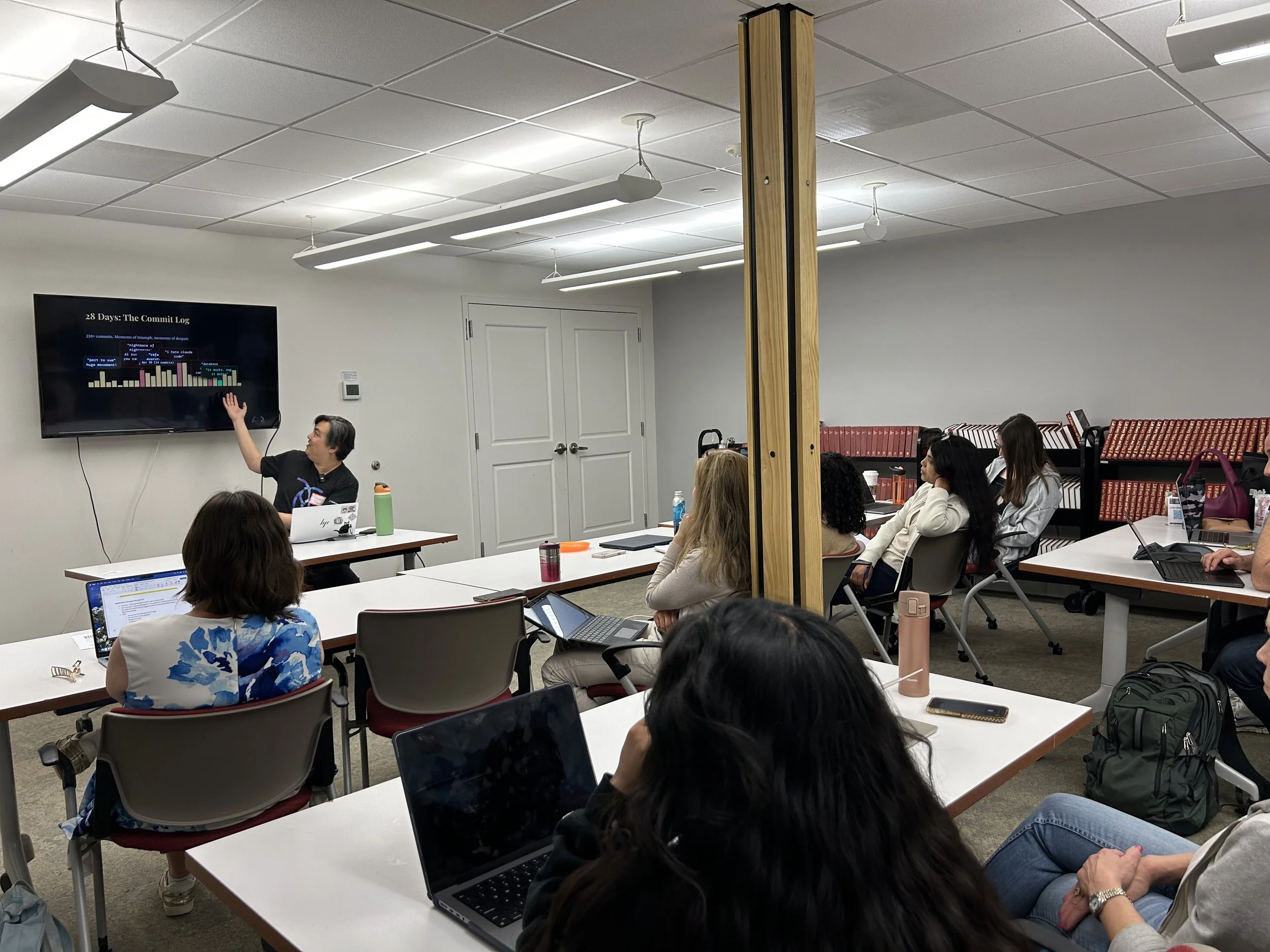
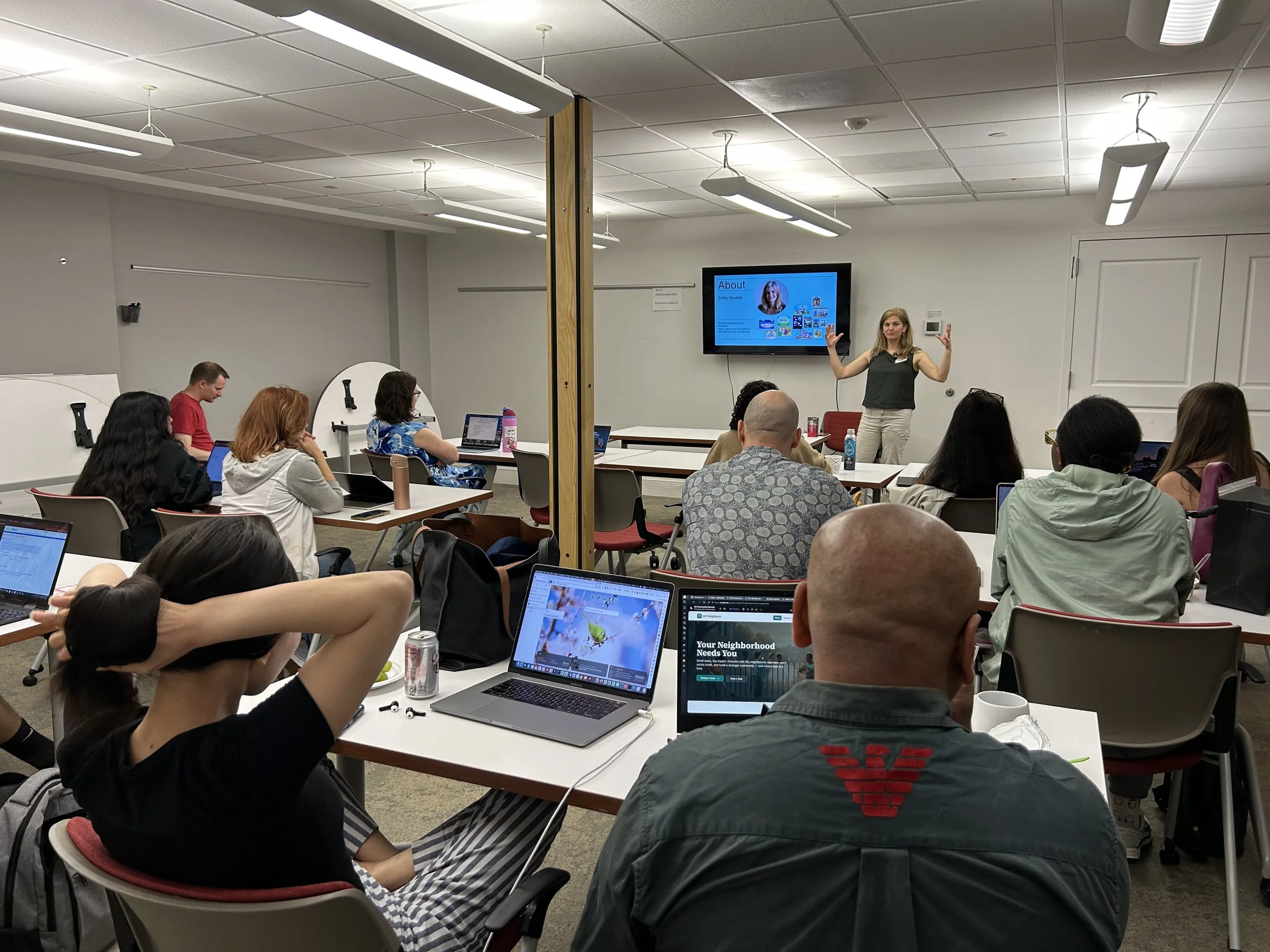
AJ Bubb of MXP Studio led the centerpiece workshop, From Prompt to Prototype, walking participants through going from a rough idea to a working, shareable prototype using AI tools. Tools like Lovable (whose license was generously provided for the day) made it possible for beginners to have something real on a screen within an hour - we saw those newfound skills in action in some of the prototypes presented later that afternoon.
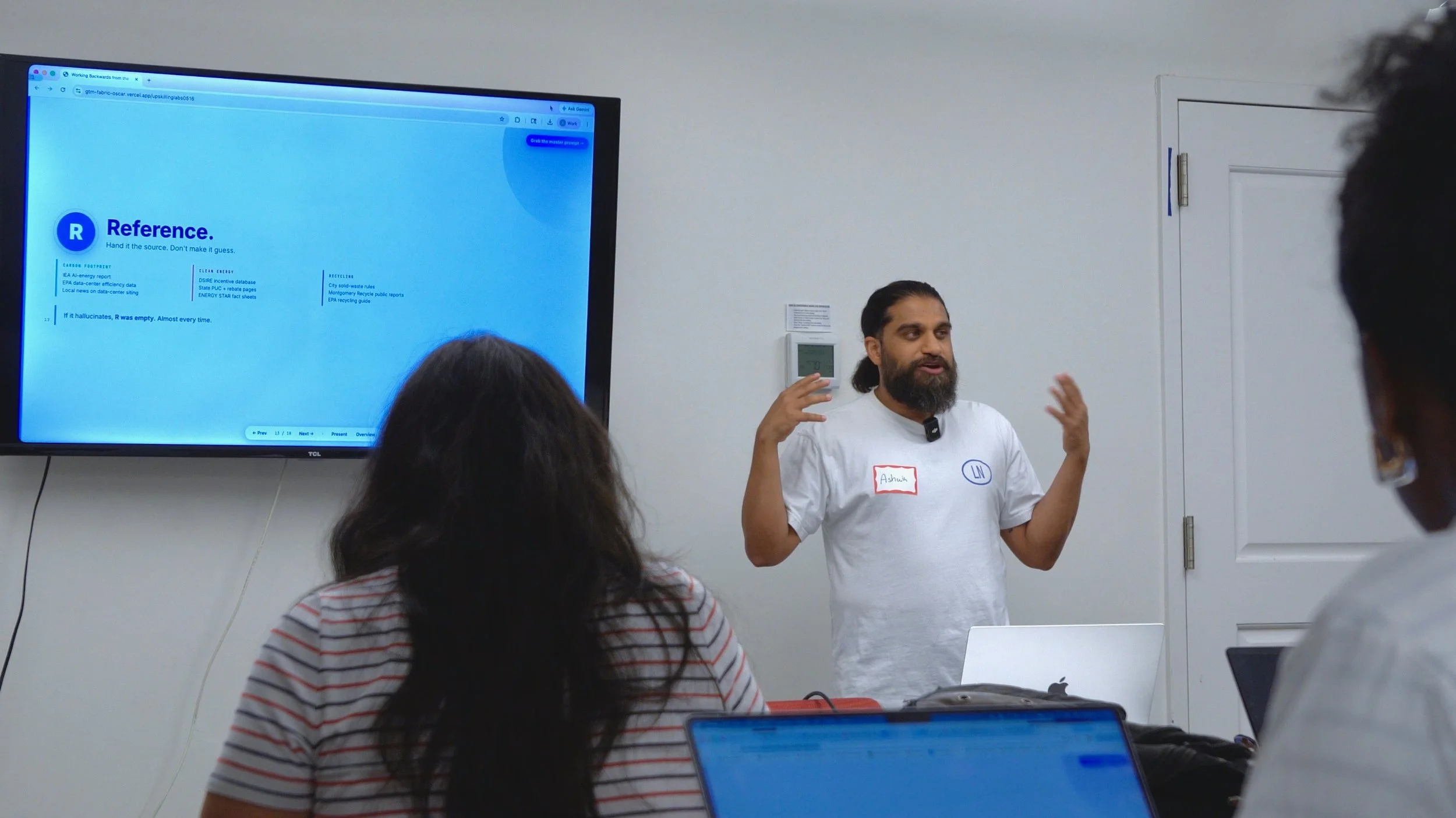
Ashwin Jaiprakash, VP of AI Product & Engineering at GTM Fabric, led the afternoon prompt engineering session — walking participants through an OSCAR approach to building prompts, prioritizing agents for repeatable tasks. Full of flexibility, Ashwin led an impromptu AMA of sorts (or AAA — ask Ashwin anything).
By midday, newcomers joined the main hall for a "fresh eyes" session with the Pods — a deliberate structural choice. Outside perspectives, the kind that haven't been marinating in a problem for weeks, have a way of surfacing assumptions that insiders miss. Both sides came away from the exchange with something new.
All told, 10 prototypes were built across the 4 pods!
No recap of the day would be complete without mentioning what was happening just outside the church doors. Capitol Hill, as it turned out, had scheduled one of its beloved neighborhood-wide yard sales for the same Saturday — and the block in front of St. Mark's became one of the busiest stretches of the whole event. Lunch break turned into an unexpected opportunity for a little bargain hunting, with participants spilling out onto the sidewalk between tables of vintage finds and curious neighbors wandering past wondering what was happening inside. It was, by all accounts, a very Capitol Hill kind of afternoon.
The Pod Sprint format has been officially adopted as a permanent fixture of every future Build Cycle. What worked on Saturday — the parallel tracks, the fresh-eyes exchange at midday, the pressure of a same-day prototype — will now be a recurring structure, not a one-off experiment.
Each participant left with more than a prototype. They left with a real plan to test their idea with an actual user in the days following the event. The Build Cycle framework treats that next step — getting something in front of someone who isn't already in the room — as the most important one.
For those who joined as newcomers, the day offered something rarer still: a chance to see that the gap between "curious about AI" and "built something with AI" is smaller than it looks. Several jumped in to join Pods, and others left already thinking about what they'd build next.
With Gratitude
This event was made possible by the generosity of our sponsors, organizers, mentors, and everyone who gave up a beautiful Saturday to work on problems that matter.
St. Mark's Episcopal Church — our gracious host venue
Capitol Hill Community Foundation — whose mini-grant directly offset event costs
MXP Studio — workshop leadership and event support ( and generously providing Lovable licenses for participants)
Alex Mills Media — for multi-media capture of the event
DC Access — for their ongoing support of community tech initiatives
Enormous thanks to the volunteers who organized this event, the mentors who led workshops and dropped in to support Upskillers, and to The Upskilling Labs' team of Pod Moderators. This one's a keeper — and it will be part of every Build Cycle going forward.